Foot Biomechanics & Gait Analysis
Expert assessment and treatment for all ages, from children’s growing feet to advanced sports performance analysis.
At Alexander & Farrell Podiatry, we specialise in understanding how your feet move and function. Proper foot biomechanics are essential for comfort, injury prevention, and performance. We assess and treat a wide range of conditions using advanced technology, including force plate assessments and video gait analysis.
Children’s Foot Health
Around a third of children experience “growing pains” – cramping pain often felt in the calf muscles or behind the knees, usually at night or at the end of a busy day. While massage can offer some relief, the pain may be linked to:
- Muscle fatigue
- Overexertion
- Flat feet
- Knock knees
Age group affected: Commonly ages 3–5, but symptoms can persist into adolescence. We can assess leg aches and often recommend simple, custom shoe insoles to relieve discomfort.
Heel Pain in Active Kids (Sever’s Disease)
Children aged 9–14 who play sports are prone to Sever’s Disease – a growth plate irritation at the back of the heel. Symptoms include:
- Pain during or after activity
- Limping
- Tenderness at the back of the heel
Treatment may include:
- Activity modification
- Stretching the Achilles tendon
- Cushioning
- Proper footwear advice
- Custom orthoses if foot alignment issues are present
A podiatrist will assess the cause and design both short- and long-term solutions.
Stages of Growth & Development
Children’s feet and legs change shape as they grow:
- Birth–toddler: Soft cartilage and bow-legged posture
- Early childhood: Knock-knees may develop
- Age 7–8: Legs usually straighten, heel widens, and foot posture stabilises
Your podiatrist can identify normal developmental stages versus potential problems, such as:
- In-toeing (pigeon toes) or out-toeing
- Flat feet or high arches
- Club foot or other congenital foot shapes
- Foot concerns linked to conditions such as cerebral palsy
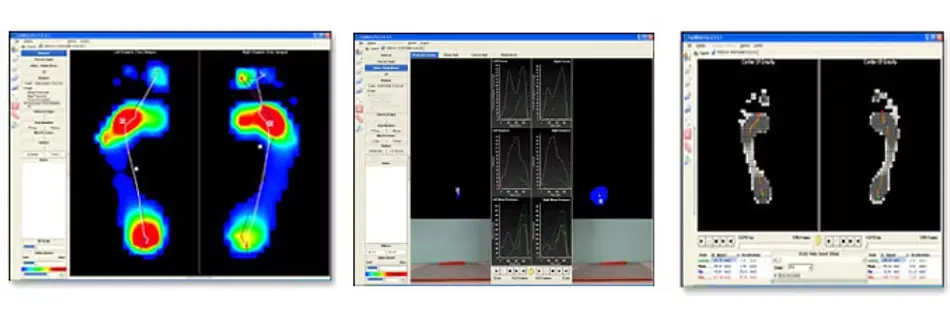
Force Plate Assessments
- Balance and postural control
- Gait mechanics
- Weight distribution
- Foot type (low, medium, or high arch)
- Supination or pronation tendencies
Benefits of Force Plate Analysis:
- Identifies biomechanical issues that may cause injury
- Provides data for custom insole prescriptions
- Ensures correct footwear selection for your sport or lifestyle
Our process:
- You walk across the force plate for analysis.
- Data is reviewed to determine foot function and gait patterns.
- Correct footwear and/or custom insoles are prescribed.
- You’re retested on a treadmill with your new shoes to confirm performance improvements.
Video Gait Analysis
We use high-speed video software (Dartfish) to capture your walking or running motion in detail. This allows:
- Slow-motion playback
- Measurement of joint angles
- Comparison before and after treatment or footwear changes
Comprehensive Gait Analysis Includes:
- Video gait recording (walking, running, or both)
- Muscle strength and balance testing
- Static and dynamic range-of-motion measurements
- Footwear assessment
- Injury and medical history review
- Training program evaluation for athletes
Understanding the Gait Cycle
The gait cycle has two main phases:
- Stance Phase – Foot is on the ground (heel strike → mid-stance → toe-off)
- Swing Phase – Foot moves through the air, preparing for the next step
Walking vs Running:
Barefoot vs Shod Running: Barefoot gait differs significantly from running in shoes, making barefoot assessment useful for accurate alignment evaluation.
Walking: One foot always in contact with the ground; double-support phases
Running: Periods when neither foot touches the ground; higher impact forces (2.4–3x body weight)
Frequently Asked Questions
What is foot biomechanics?
Foot biomechanics is the study of how your feet move and bear weight during walking, running, or standing. It helps identify misalignments that may lead to pain or injury.
Who should get a gait analysis?
Gait analysis is helpful for anyone with foot, ankle, knee, or hip pain, not just athletes. It’s also recommended for children with walking concerns or those who experience frequent leg aches.
What is a force plate assessment?
A force plate measures how your weight is distributed across your feet. It identifies imbalances in posture and gait to help your podiatrist design the right treatment or orthotics.
Is gait analysis only for runners?
No. While runners use it to improve performance and prevent injuries, it’s also valuable for people with pain, balance issues, or medical conditions like arthritis or flat feet.
What’s the difference between force plate and video gait analysis?
The force plate measures pressure and balance; video analysis captures your movement in detail. Combined, they provide a full picture of how your feet and legs function.
Can growing pains in kids be caused by foot problems?
Yes. Ongoing leg or foot pain in children may be linked to flat feet, knock knees, or poor biomechanics. A podiatry assessment can help diagnose the cause and provide relief.